The rolling cash flow forecast of Revise EPM
compiles upcoming cash inflows and cash outflows
on a weekly basis and shows how the company's cash reserves and available
liquidity develop. The forecast can also
consider available financing as well as the impacts of project payment instalments and
advance payments on future cash flow.
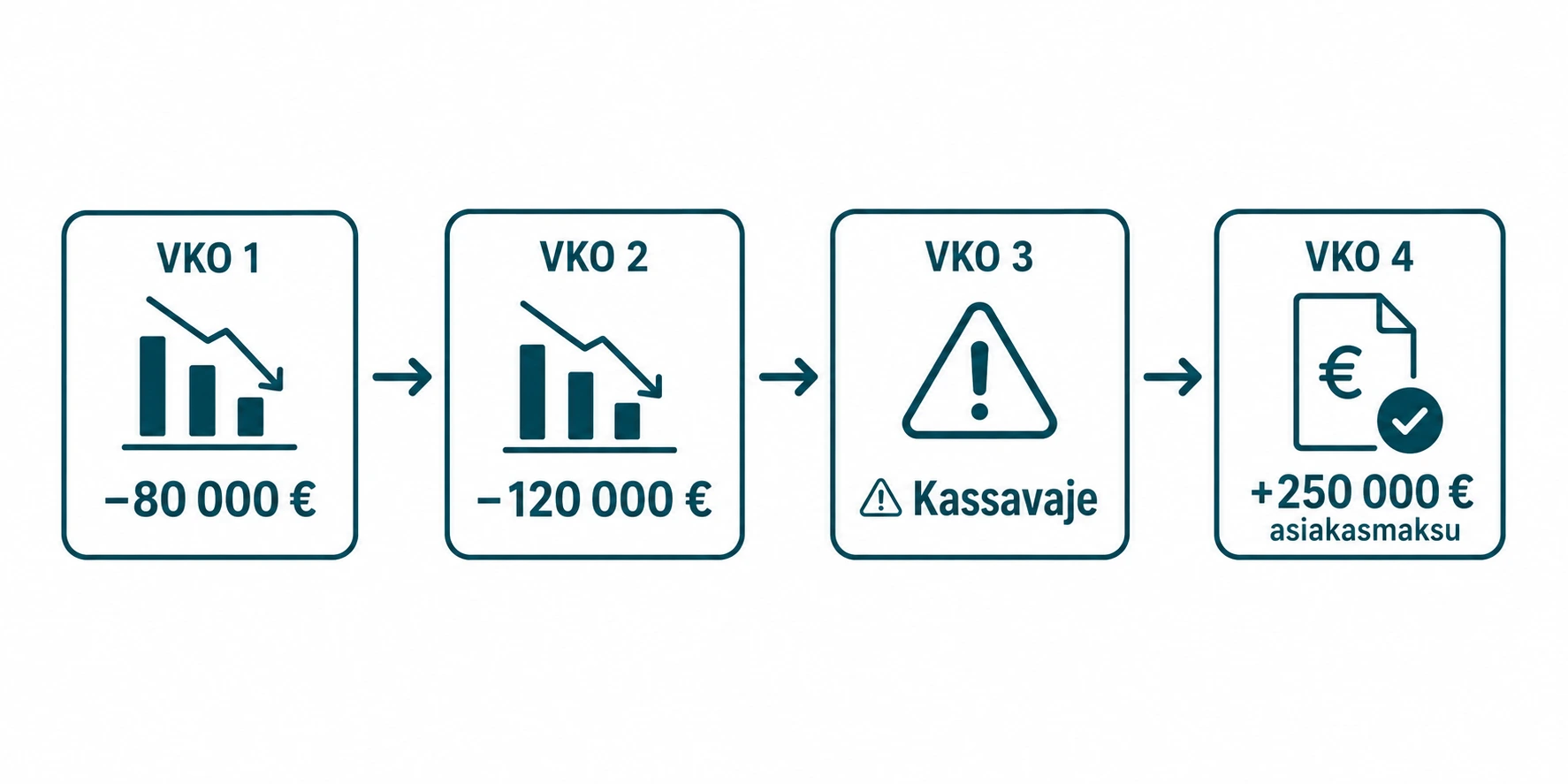
The total cash flow for the month
may look good, even if the company's funds are insufficient
in all weeks of the month.
For example, a large
customer payment may come in the last week of the month, even though salaries, taxes
and suppliers need to be paid earlier.
Weekly level forecasting
brings timing into view.
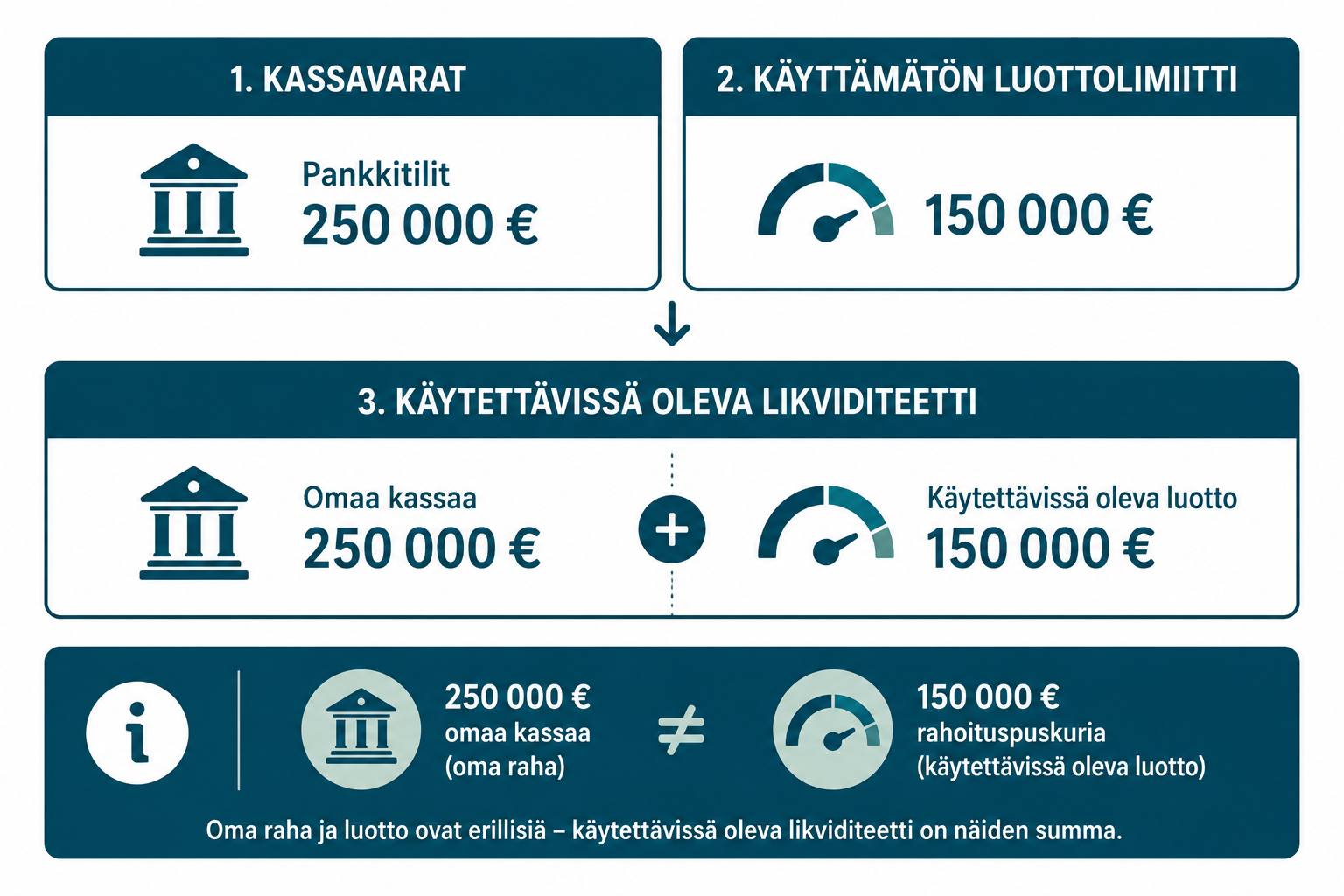
The bank account balance does not reflect the full liquidity
Weekly cash flow forecast
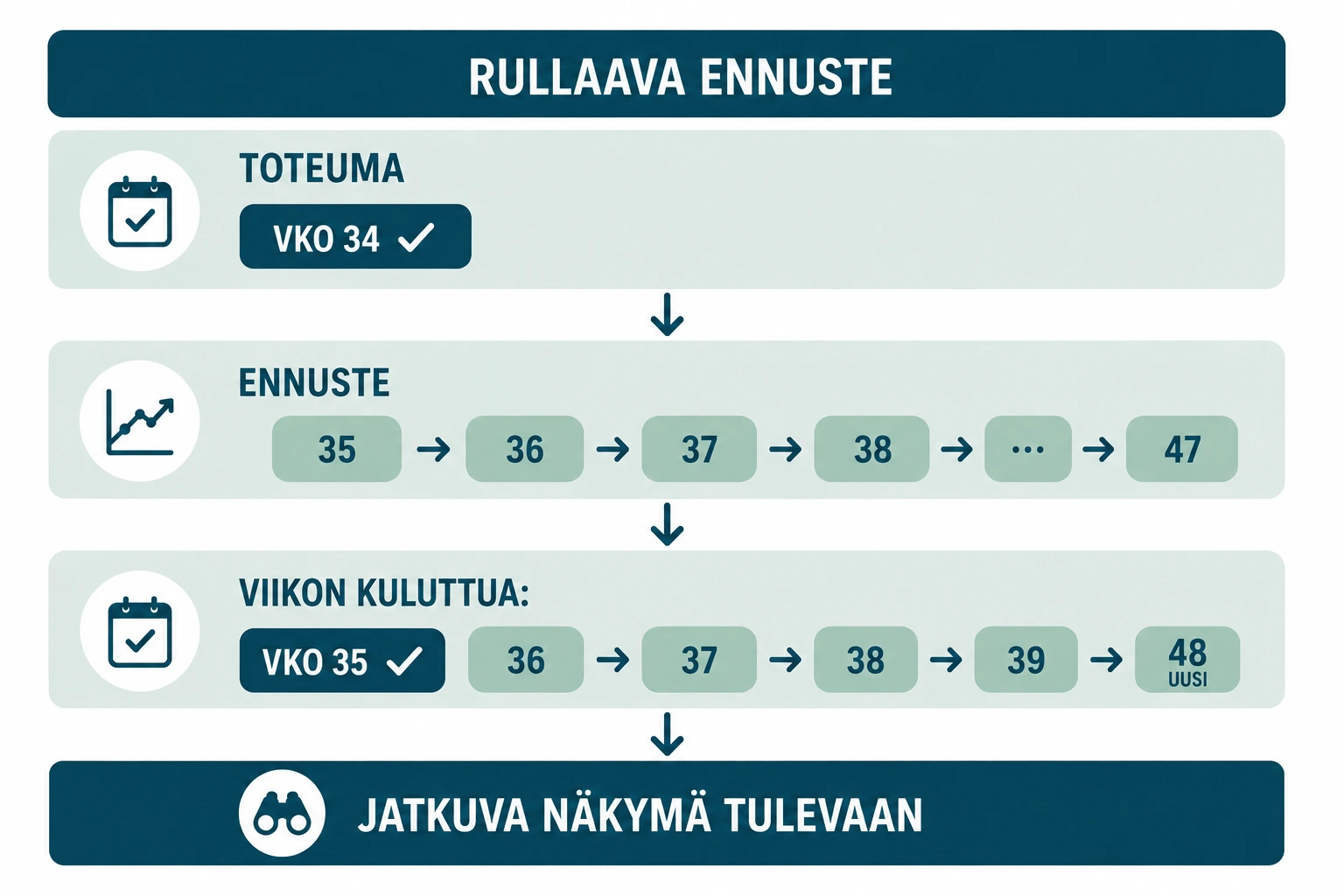
The focus remains constantly on future weeks Cash flow forecasting is done on a rolling basis.
When one week is realised, the realised cash flows replace the forecast and the forecast period
is extended by a new week.
This way, the company has a constantly up-to-date view of future liquidity.
The realisation updates the starting situation and the forecast continues always forward.
What does the cash flow of the coming weeks consist of?
1
TO CASH
✔ customer payments
✔ project payment instalments
✔ advance payments
✔ other income
✔ financing
2
FROM CASH
✔ purchase invoices
✔ salaries
✔ taxes
✔ loans and interest
✔ investments
3
WEEKLY NET CASH FLOW
4
ENDING CASH
✔ Available financing
5
AVAILABLE LIQUIDITY
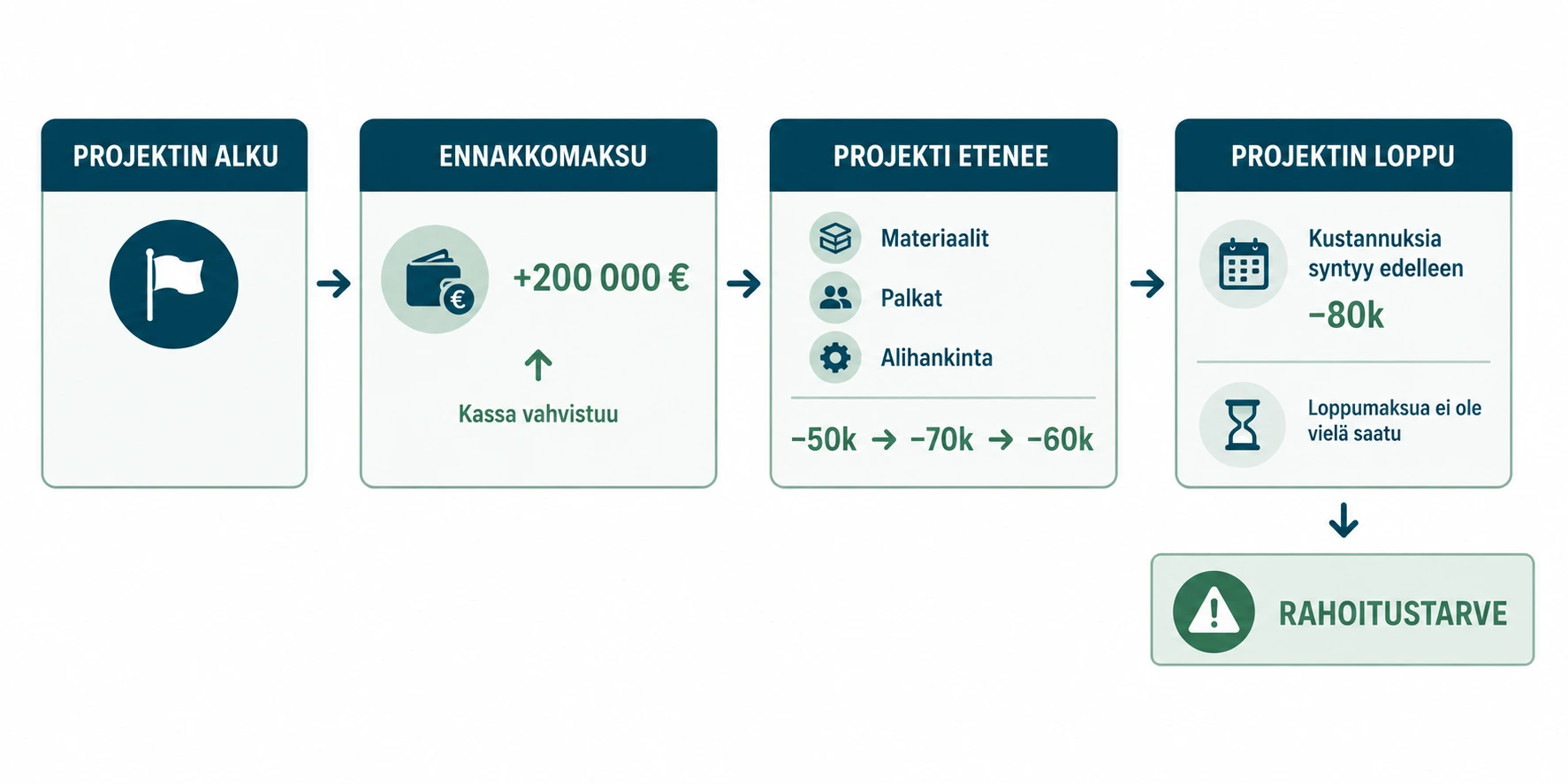
Advance payment helps at the start of the project – but money is needed later
An advance payment received from the customer
can significantly improve the cash situation at the beginning of the project.
At the same time, the company
incurs an obligation to carry out the project, the materials, labour, subcontracting and other
costs of which will be paid later.
If the advance payment
is used for other activities and the remaining cash needs of the project
are not considered, a good cash situation can quickly turn into a
financing need at the end of the project.
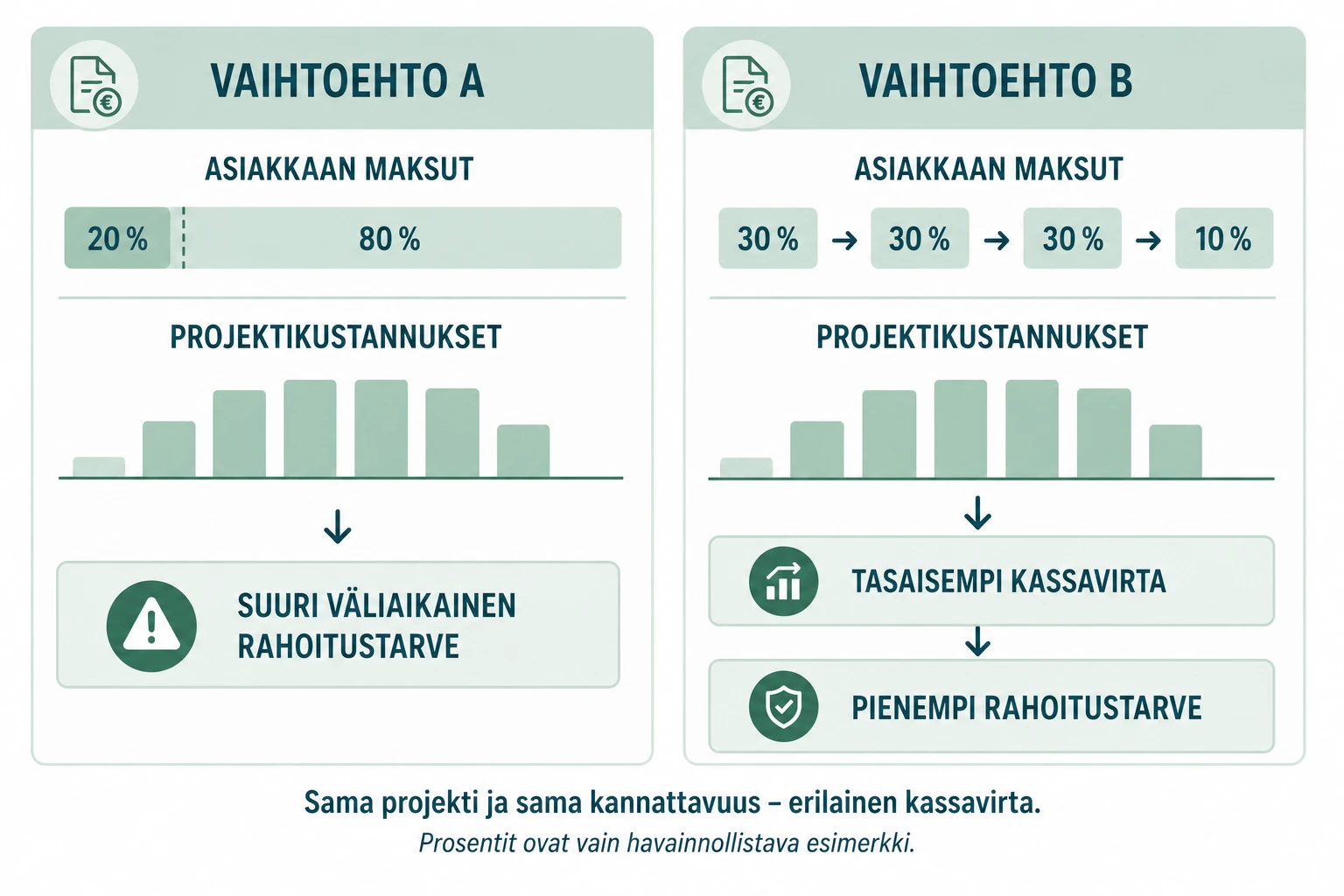
Payment terms are also about managing cash flow
The profitability of the project
can be the same with two different payment schedules, but
the financing need of the project can be completely different.
Well-planned
payment instalments can reduce the company's need to finance the customer's project
from its own cash.
See cash shortfall before the money runs out
Simply showing the upcoming
cash shortfall is not enough. Management needs to see,
when its own cash buffer starts to dwindle, when the credit limit needs to
be used, and when the overall liquidity is also at risk of running out. This is
the key management benefit of cash flow forecasting.
NORMAL CASH FLOW CURVE
Own cash is sufficient
NOTICE
Cash buffer falls below target level
WARNING
Credit limit is needed
CRITICAL
Available total liquidity is at risk of running out
ACTIONS REQUIRED
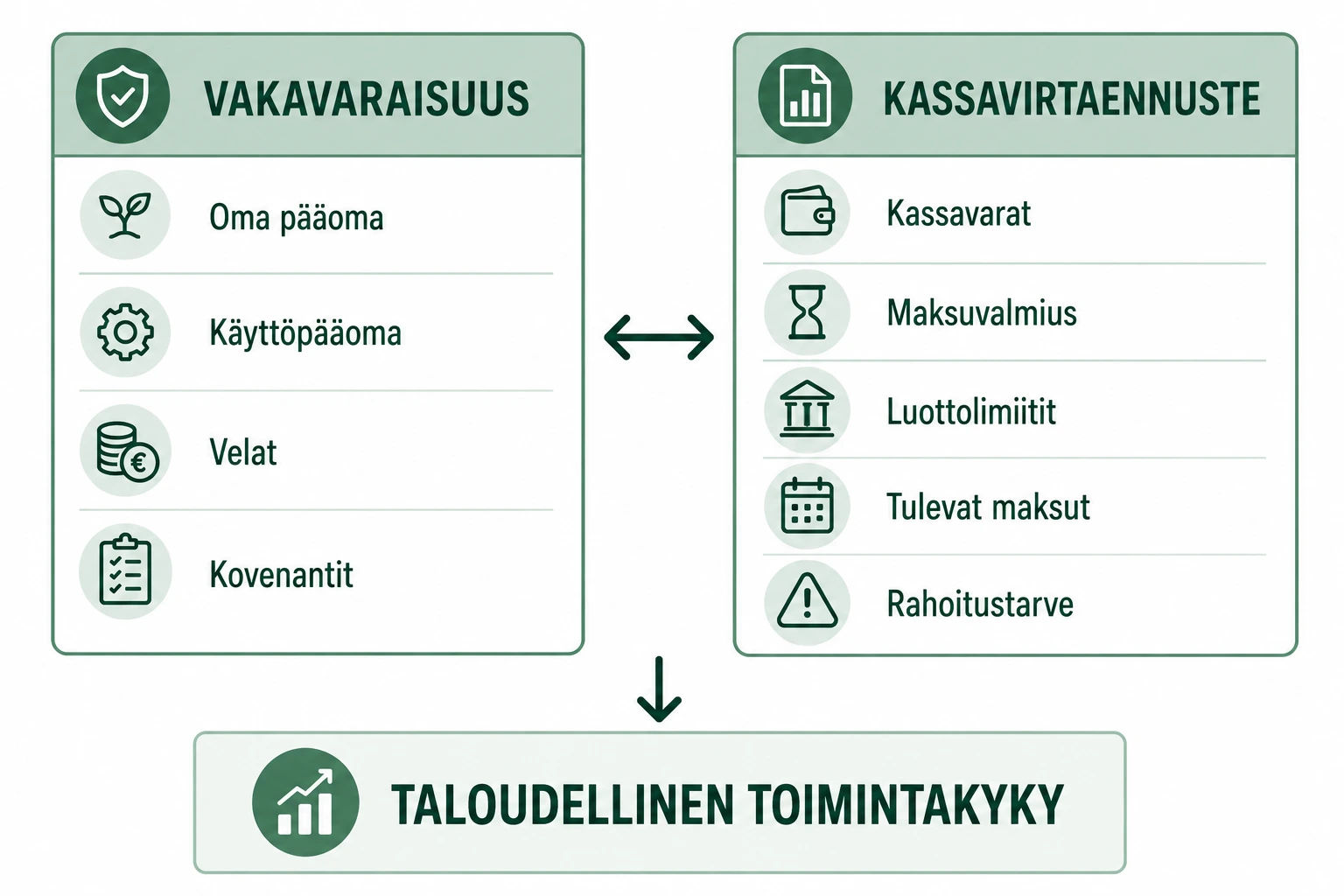
The balance sheet and cash flow show the same future from different perspectives
A rolling
cash flow forecast helps to see the cash inflows,
cash outflows and available liquidity for the coming weeks. When changes
are seen early enough, the company has more time to influence the timing of payments,
working capital, and financing.