Balance forecast – see the company's financial position ahead
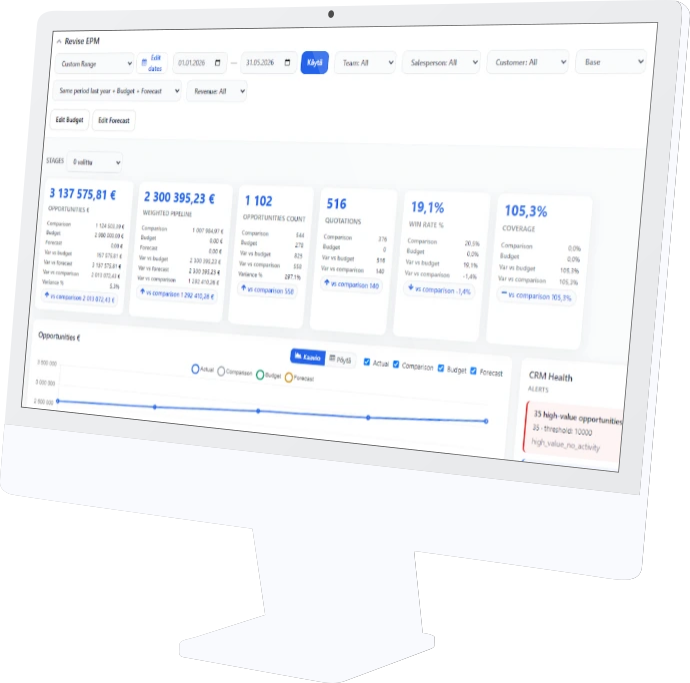
5 Questions of Management
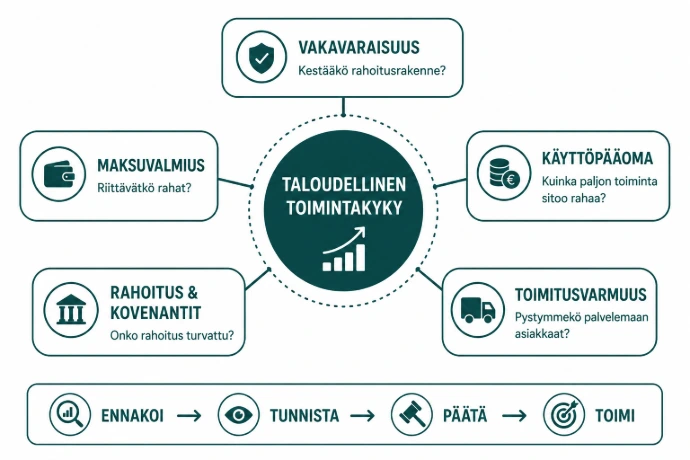
SOLVENCY
Equity, solvency ratio, and indebtedness.
WORKING CAPITAL
Accounts receivable, inventory, and accounts payable.
LIQUIDITY
Cash reserves, upcoming payments, and available financing.
FINANCING & COVENANTS
Cash reserves, upcoming payments, and available financing.
SUPPLY SECURITY
Purchases, inventory, suppliers, and the ability to meet customer promises.
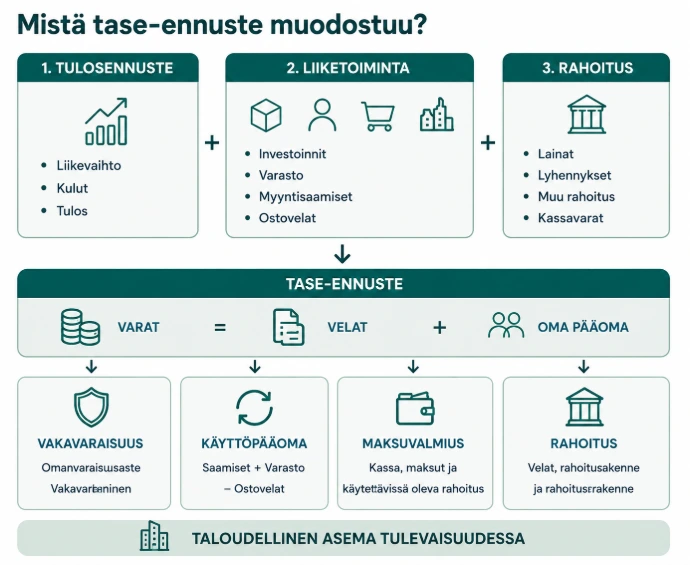
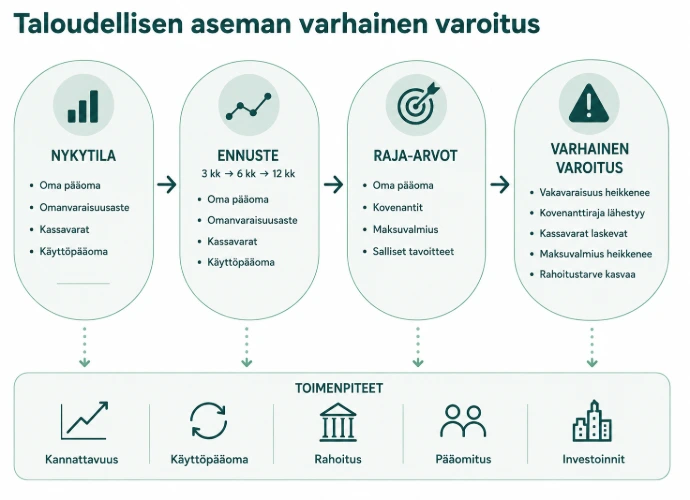
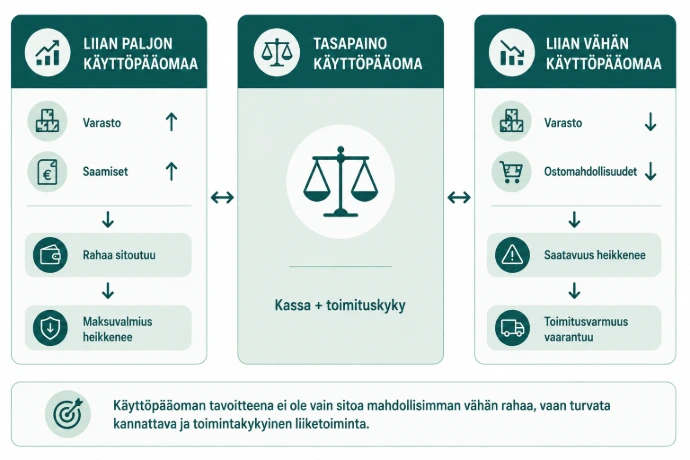
Working capital affects whether the company can serve its customers.
If too much money is committed to inventory, liquidity may weaken. Conversely, if inventory is
reduced too much or the company does not have enough financing for purchases, it may result in a decline in delivery capability.
Therefore, the company must find a balance:
as little committed capital as possible while still having sufficient ability to meet customer demand.
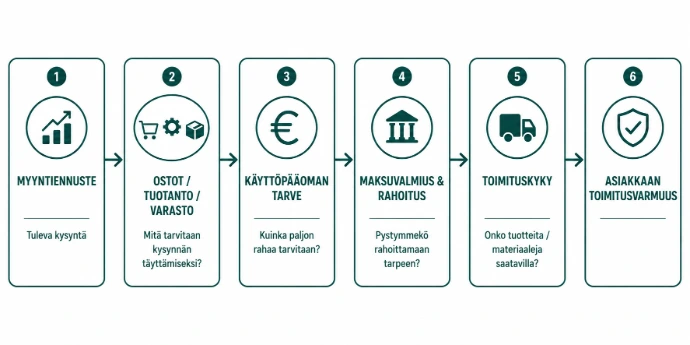
Financial forecasting also helps secure delivery capability.
Finance, working capital, and operational activities are therefore directly related.
Covenant risk is not just a financing agreement issue.
monitored key figure.
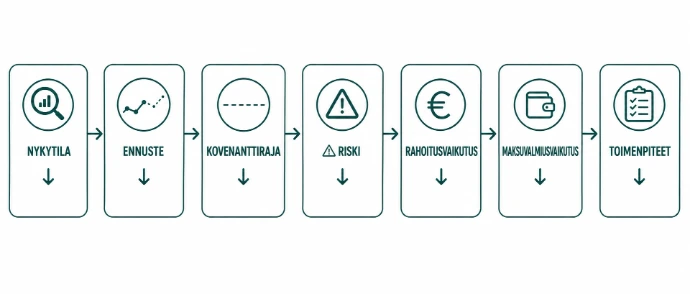
The balance sheet forecast ultimately indicates the company's ability to continue planned operations
Solvency, liquidity, working capital, and financing are not separate key figures.
They together determine how well the company can:
pay
its obligations
finance
its growth
make
investments
acquire
the necessary products and materials
maintain
its delivery capability
cope with
unexpected changes
↓
FINANCIAL
CAPABILITY
SALES FORECAST
What will we be selling?
➔
Profit forecast
How is profitability developing?
➔
Balance sheet forecast
How is the financial position developing?
➔
Cash flow forecast
Are the funds sufficient?
➔
Business
operational capability
Solvency • Liquidity • Financing • Delivery capability